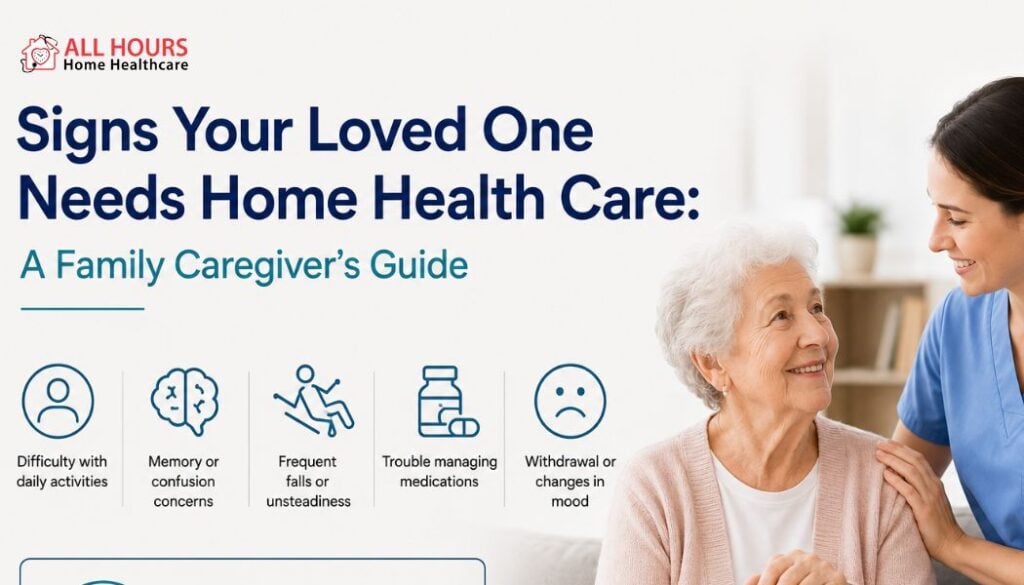
Signs Your Loved One Needs Home Health Care: A Family Caregiver's Guide
Most families don’t wake up one day and decide it’s time for home care. Instead, it happens gradually, a missed pill here, a small bruise there, a pantry with expired food. By the time these details add up, many caregivers are already exhausted and unsure whether what they’re seeing is “normal aging” or something more serious.
If you’ve been asking yourself when does someone need home care, you’re not alone, and you’re not overreacting. Recognizing the signs early, before a fall, a hospitalization, or a health crisis forces the decision, is one of the best things you can do for your loved one’s safety and independence. Below, we cover the most common signs elderly need help, when non-medical support is enough, and when it’s time to bring in skilled or nursing-level care.
Why Timing Matters More Than Families Realize
Home health care isn’t just for people who are seriously ill. The families who benefit most are often the ones who reach out before a crisis, not after. Starting care early lets your loved one age in place safely, keeps small problems from becoming emergencies, and gives family caregivers room to breathe. The challenge is that aging parents rarely announce they’re struggling. Pride, fear of losing independence, and simple denial all play a role. That’s why it helps to know exactly what to look for.
8 Common Signs Your Loved One Needs Home Health Care
1. Unexplained Weight Loss or Poor Nutrition
An empty refrigerator, expired food, or noticeable weight loss can point to trouble cooking, shopping, or remembering to eat, often one of the earliest and most overlooked signs elderly need help.
2. Missed Medications or Medication Confusion
Skipped doses, duplicate pills, or a medicine cabinet that doesn’t match the prescription bottles are red flags. Managing multiple prescriptions (polypharmacy) becomes genuinely dangerous without oversight.
3. A Decline in Personal Hygiene or Housekeeping
Wearing the same clothes repeatedly, skipping showers, or letting laundry and dishes pile up can signal that daily tasks have become physically or mentally overwhelming.
4. Recent Falls or New Mobility Issues
Bruises, a cane suddenly by the door, or hesitation on stairs suggest a fall has already happened or is likely to. Falls are a leading cause of hospitalization for older adults, and one of the most preventable with the right in-home support.
5. Missed Appointments or Disorganized Finances
Unpaid bills, missed doctor visits, or confusion about dates often point to cognitive changes that need more attention than a family member can provide part-time.
6. Increasing Isolation or Mood Changes
Withdrawing from friends, hobbies, or phone calls can signal depression, cognitive decline, or simply the fatigue of managing daily life alone. Companionship is a core part of non-medical home care for exactly this reason.
7. A Recent Hospital Stay or New Diagnosis
Hospital stays are shorter than they used to be, which means recovery happens largely at home. Wound care, post-surgical monitoring, and chronic disease management often require skilled nursing support to prevent readmission.
8. Caregiver Burnout in the Family
If you’re the one providing care and you’re feeling exhausted or stretched too thin, that’s a sign too. Bringing in professional help protects both your loved one and your own health.
Non-Medical Care vs. Skilled Nursing Care: What’s the Difference?
Not every family needs the same level of support, and that’s a good thing, home care is not one-size-fits-all.
Non-medical home care typically covers help with bathing, dressing, meal preparation, light housekeeping, transportation, and companionship. It’s ideal for loved ones who are largely independent but need a hand with daily activities.
Skilled medical home care and private duty nursing are appropriate when there’s a medical component: wound care, medication management, IV infusion therapy, chronic disease monitoring, or post-hospitalization recovery. This level of care is provided by licensed nurses rather than trained caregivers.
Many families start with light, non-medical support and add skilled nursing later as needs change. A good provider reassesses regularly and adjusts the care plan rather than locking you into a fixed package.
When to Consider Private Duty Nursing
If your loved one’s needs go beyond daily assistance, think medication management, wound care, or a recent hospital discharge, private duty nursing provides one-on-one, licensed nursing care in the home. For families searching for private duty nursing in Littleton, MA, this typically means a registered nurse or licensed practical nurse coming into the home on a scheduled basis to manage medical needs that would otherwise require a facility stay.
Private duty nursing is also worth considering for families managing complex conditions like diabetes, COPD, or congestive heart failure, where consistent clinical oversight makes the difference between a smooth recovery and a return trip to the hospital.
In-Home Care Options for Carlisle, MA Families
Carlisle families looking for in-home care in Carlisle, MA often start with a simple question: is my parent safe living alone right now? The honest answer is usually somewhere between “totally fine” and “needs to move.” That’s exactly where in-home care fits, it lets your loved one stay in the home and community they know, with support scaled to their actual needs.
All Hours Home Healthcare provides both non-medical and skilled in-home care throughout Carlisle and the greater Massachusetts area, with 24/7 availability so families never have to wait for help during a middle-of-the-night emergency or an early-morning fall.
What to Do If You’ve Noticed These Signs
If even a few of these signs feel familiar, the next step doesn’t have to be dramatic. Start with a conversation, not an ultimatum:
- Talk with your loved one about specific concerns, not generalizations (“I noticed the stove was left on” rather than “you can’t take care of yourself”).
- Schedule a check-up with their primary care doctor to rule out underlying medical issues.
- Request a free in-home care assessment to get an objective, professional read on what level of support makes sense.
A licensed home care agency can evaluate the situation without the emotional weight that often complicates these conversations between parents and adult children.
How All Hours Home Healthcare Can Help
All Hours Home Healthcare provides 24/7 in-home support across Massachusetts and New Hampshire, including non-medical personal care, skilled medical home care, medication management, home infusion therapy, and private duty in-home nursing. Every care plan is personalized around a real assessment of your loved one’s needs not a generic package.
Whether you’re noticing early signs elderly need help or already managing a complex medical situation after a hospital stay, our licensed nurses and trained caregivers are available around the clock to step in.
Conclusion
Recognizing the signs your loved one needs home health care can help families take action before small concerns become serious problems. Whether they need help with daily activities, skilled nursing support, or specialized care, the right assistance can help them stay safe and independent at home. At All Hours Home Healthcare, we provide compassionate, personalized care plans designed to meet each client’s unique needs. If you’re unsure what level of support your loved one needs, our team is here to help you find the right solution.
Frequently Asked Questions
When does someone need home care?
Home care is needed when seniors struggle with daily tasks like bathing, meals, mobility, or medications, or after a hospital stay, fall, or new health concern.
What are the earliest signs elderly need help?
Signs include missed appointments, expired food, poor hygiene, unopened mail, mood changes, and difficulty managing daily routines independently.
What's the difference between non-medical home care and private duty nursing?
Non-medical home care helps with daily activities and companionship, while private duty nursing provides skilled medical care from licensed nurses.
Does insurance cover in-home care?
Insurance coverage depends on the service, plan, and medical needs. Skilled nursing may qualify for coverage, while personal care often does not.
Can home care help after a hospital discharge?
Yes, home care supports recovery with medication reminders, mobility assistance, daily activities, and monitoring to help prevent complications.
Why is early home care important for seniors?
Early home care improves safety, reduces fall risks, supports independence, prevents caregiver stress, and helps seniors stay comfortable at home.